The four things to do
If you or someone with you has chest pain lasting more than a few minutes, or with any warning sign below, treat it as a heart attack until proven otherwise.
- Call 999 immediately. Say "I think it's a heart attack". Crews start treatment and an ECG before you reach hospital. Don't phone a relative, a GP or 111 first.
- Sit down and stay still. On the floor with your back against a wall or chair and knees bent. It eases the strain on your heart and protects you if you faint.
- Chew one 300mg aspirin, if you have it and are not allergic. Chewing works faster than swallowing. Don't get up to look for it, and don't take it if a doctor has told you not to.
- Unlock the door. Do not drive yourself. Keep your phone with you. Note the time the pain started. If the person stops breathing normally, start CPR.
Not sure if it's a heart attack? Call 999 anyway. Paramedics would far rather check you and find nothing than arrive too late. Nobody will be annoyed that you called.
What a heart attack feels like
It rarely looks like the films. Pain is often mild, and some people have no chest pain at all, especially women, older people and people with diabetes.
Women often get "quieter" symptoms: unusual tiredness, breathlessness, nausea, or pain in the back, jaw or arm without obvious chest pain. These are still heart attack symptoms. Call 999.
Heart attack
A blocked artery starves part of the heart of blood. The person is awake and usually in pain. Call 999 and follow the four steps.
Cardiac arrest
The heart stops pumping. The person collapses, doesn't respond, and isn't breathing normally. Call 999 and start CPR now.
Built for the minutes that matter
Most health sites are written to be read at a desk. This one is built to be used in the moment, with shaking hands, on a phone, possibly with no signal.
Emergency Mode
One step at a time, in huge text. It reads each step aloud, times how long since the pain started, finds your postcode to give 999, and keeps a log you can hand to the paramedics.
My Heart Card
Your medicines, allergies and conditions, ready to show a paramedic. Stored only on your phone. Never sent anywhere.
CPR pacer
Beats, clicks and vibrates at the right speed for chest compressions.
1-minute check
Five questions that tell you whether it's 999, 111 or your GP.
Works offline
Open it once and it keeps working with no signal. Add it to your home screen.
6 languages + easy read
Polish, Urdu, Punjabi, Bengali, Welsh, and a large-print easy read version.
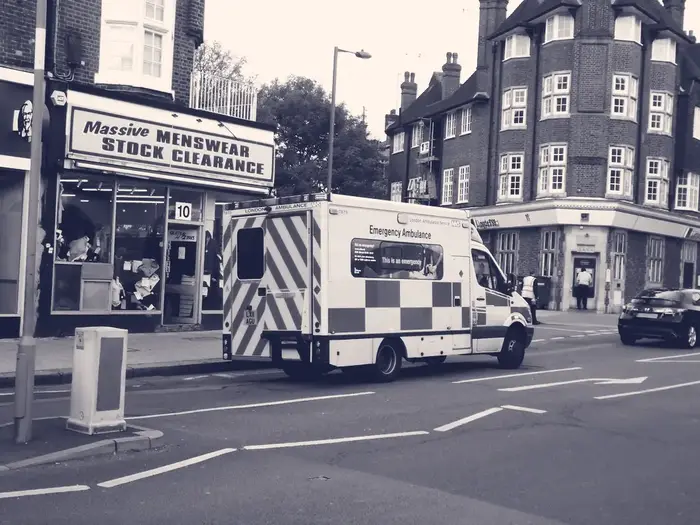
 Photo: Matt From London, CC BY 2.0, colour-graded
There may be a defibrillator closer than you think.
Phone boxes, village halls, shops and stations. Find the one nearest your home today, before you need it. Defib Finder →
Everything else you need to know
What else causes chest pain?
Angina, reflux, panic, muscle strain, clots. Which still need 999.
ReadAngina and GTN spray
If you have a diagnosis: when angina becomes a 999 call.
ReadHelping someone else
What to tell 999, what to gather, what to do while you wait.
ReadCPR and defibrillators
Step by step, with a compression pacer on your phone.
ReadWhat happens in hospital
ECG, blood tests, angiogram, stents. What to expect.
ReadRecovery
Cardiac rehab, driving rules, work, sex, flying, new medicines.
ReadKnow your risk
Family history, free NHS checks, and what makes the biggest difference.
ReadPosters and fridge cards
Free PDFs for your kitchen, workplace, club or waiting room.
DownloadGuides for your situation
Things people say before it's too late
"It's probably just indigestion."
A heart attack often feels exactly like indigestion or heartburn. If the discomfort is new, unusual for you, lasts more than a few minutes or comes with sweating, breathlessness or nausea, call 999. Let a professional decide.
"I'm too young, fit or healthy."
Heart attacks happen to people in their 30s and 40s, to marathon runners and to people with no known risk factors. Age and fitness lower the odds, but they don't rule it out.
"I don't want to waste the ambulance's time."
Chest pain is one of the most important calls the ambulance service takes. Checking someone and finding nothing is a good outcome. Arriving to a cardiac arrest that could have been prevented is not.
"I'll drive to A&E, it'll be quicker."
Ambulance crews carry an ECG, drugs and a defibrillator, and can alert the hospital's heart team so you go straight to treatment. If you have a cardiac arrest in your car, you die. Call 999.
"I'll sleep on it and see the GP in the morning."
Heart muscle dies by the minute during a heart attack. The damage done overnight is permanent. The sooner an artery is opened, the more heart you keep.
"The pain went away, so I'm fine now."
Pain that comes and goes can be a warning of a bigger blockage about to happen (unstable angina). It still needs urgent assessment. Call 999 if it lasted more than 15 minutes, or 111 if it was brief and you're unsure.
Useful links
Sources
This page is based on the published guidance below. It was last updated on 30 September 2026. Read how we write our content, or email hello@chestpain.org.uk to report a mistake.